Appliance-Moving-Service-in-Vaughan-What-Movers-Will-Wont-Move

Appliance and Furniture Moving Services in Vaughan: What Movers Handle and What They Do Not

Moving a household is challenging. Moving a single, heavy appliance or a bulky piece of furniture presents a unique set of risks that standard moving crews aren’t always equipped to manage. The moment you need to relocate a refrigerator down a narrow condo hallway in the Vaughan Metropolitan Centre, or maneuver a sectional sofa through a century-old home in Thornhill, the entire project changes. This isn’t about boxes; it’s about physics, property damage, and personal injury. A professional appliance moving service or furniture moving service exists precisely for this scenario. They are the specialists who understand the weight distribution of a washing machine, the disassembly points of a modular bed frame, and the precise angle to tilt a marble-top dining table. This guide provides the decision-level clarity you need to determine when to call the specialists, what that service actually entails, and how to avoid the costly mistakes that occur when heavy, awkward items are handled without the correct protocols and equipment. For a foundational understanding of professional moving,

Understanding Appliance Moving Service

What Is an Appliance Moving Service?

An appliance moving service is a specialized logistics operation focused exclusively on the safe relocation of heavy, complex, and often integrated home appliances. This service transcends basic transportation. It encompasses the skilled disconnection of appliances from home utilities (water, gas, electricity), their secure preparation for transit (draining, securing internal components), their physical movement using commercial-grade equipment, and their careful placement at the destination. The technicians performing this work understand the mechanical vulnerabilities of appliances—knowing, for instance, that a refrigerator must be transported upright to avoid compressor oil migration, or that a washing machine’s drum must be locked with transit bolts. Their goal is to deliver an appliance that is not only physically intact but also remains mechanically functional post-move. This level of care is part of what defines a first-rate mover in the Vaughan area.

Appliance Moving Service vs General Moving Services

The distinction here is one of capability and risk assumption. A general local moving service will typically move appliances as part of a full-household relocation, but their approach is often limited to “blanket-wrapping and carrying.” They may lack the specific knowledge or tools to safely disconnect a gas range or properly prepare a front-load washer. An appliance moving service operates with a different mandate. They carry specialized tools for disconnecting gas flex lines and water supply hoses. They use appliance dollies with stair-climbing capabilities and high-weight-capacity straps. Most critically, they assume a higher degree of liability for the mechanical function of the item, whereas a general mover’s liability is often limited to physical damage from drops or impacts, not internal mechanical failure caused by improper handling. For complex moves involving multiple heavy items, a dedicated manpower service team is often deployed.

When Appliance Moving Service Is Required

You should engage a dedicated appliance moving service under several key conditions. The first is when dealing with heavy and oversized appliances that exceed the safe lifting capacity of a standard two-person crew, such as commercial-grade refrigerators, large double-oven ranges, or stacked laundry centers. The second, and more critical, scenario involves installation-dependent appliances. This includes any appliance requiring disconnection from a fixed utility: gas stoves and dryers, built-in dishwashers with hardwired electrical connections, or water filter fridges with ice maker lines. Attempting to disconnect these without proper knowledge can lead to gas leaks, water damage, or electrical hazards. In these cases, the moving service acts as the crucial bridge between the old location’s utilities and the new one, ensuring the appliance is rendered safe for transport. For seniors navigating such complexities, integrating this with a senior moving service can provide a comprehensive solution.

Understanding Furniture Moving Service

What Is a Furniture Moving Service?

A furniture moving service is a targeted solution for relocating bulky, heavy, or fragile furniture items without the context of a full residential move. This service is built around the principles of spatial logistics and material protection. Specialists assess the item’s dimensions, weight, and material composition (solid wood, particle board, glass, or leather) and then determine the optimal path and method for movement. This involves strategic disassembly (removing legs, detaching headboards, separating sectional pieces), applying the correct protective materials (padded shrink wrap for polished wood, breathable covers for fine upholstery), and using the right mechanical aids (forearm forklifts for heavy dressers, piano boards for long sofas). The value is in preserving the item’s condition and your property’s walls, doorways, and floors during the complex maneuver from one room or building to another. This is a core component of our broader moving services portfolio.

Furniture Moving Service vs Full Residential Moves

A full residential move, such as a standard house moving service, is a volume operation optimized for efficiency across hundreds of items. A furniture moving service is a precision operation. In a full move, a crew might blanket-wrap a sofa and carry it; in a dedicated furniture move, the crew will first determine if the sofa needs to be tilted on its end, if cushions should be removed and packed separately, or if the feet need to be unscrewed to clear a low doorway. The pricing model also differs. Full moves are often based on total volume and time. Furniture moving services are frequently priced by the item or by the job, accounting for the specific complexity and manpower required for that particular piece. This service is ideal for scenarios like delivering a new purchase from a store, moving a single heirloom piece between family homes, or reconfiguring furniture within a large residence.

Common Use Cases for Furniture Moving Service

The demand for this service often arises from specific, non-whole-house scenarios. A classic example is the single-item move: you’ve purchased a new mattress or a large leather couch and need it transported from the retailer or your old home to your new one. Retail delivery often ends at the curb; a furniture moving service brings it inside, places it in your chosen room, and removes packaging. Another common use is the partial home move, where you are only relocating a few key pieces of furniture—perhaps a bedroom set, a dining table, and a china cabinet—while leaving the rest behind. This is common during downsizing, staged moves, or when furnishing a secondary property. It requires the same skill as a full move, but is focused on a curated set of challenging items. For those moving out of province, this can also be part of a coordinated long-distance moving plan.

Types of Items Covered by Appliance Moving Service

Kitchen Appliance Moving Service

The kitchen presents the highest concentration of complex, connected appliances. For refrigerator and freezer moving, the process is methodical: food removal, defrosting (if needed), cleaning, and securing of all shelves, drawers, and doors with tape or straps. The unit must be kept upright. Stove, oven, and range transport requires careful attention to the power source. Electric models need to be unplugged from a dedicated 240V outlet; gas models require a qualified person to shut off the gas and disconnect the flexible supply line, capping the gas line for safety. Downdraft vents for ranges add another layer of disassembly. Dishwasher and microwave handling varies widely. Built-in dishwashers are often hardwired and plumbing-connected, requiring professional disconnection. Over-the-range microwaves are heavy and mounted to a cabinet or wall bracket, needing careful detachment. These tasks fall under a true specialty appliance moving service umbrella.

Laundry Appliance Moving Service

Laundry appliances are deceptively heavy due to their concrete counterweights and robust motors. Washing a machine is a specialized task. Before movement, the technician must reinstall the transit bolts (or shipping rods) that lock the drum in place. Failure to do this can result in catastrophic internal damage during transport as the suspended drum bounces freely. The machine must also be drained of residual water. Dryer moving involves disconnection from either a 240V electrical outlet (for electric models) or a gas line and vent duct (for gas models). The flexible vent hose is typically removed and discarded, as a new one should be used at the new location for safety and efficiency. Both appliances are moved on an appliance dolly, often with a strap to secure them to the dolly on stairs. This is a standard, yet critical, procedure for any reputable mover serving areas like Richmond Hill or Markham.

Specialty and Heavy Appliance Moves

This category moves beyond standard home appliances and into commercial-grade or integrated units. Commercial-grade appliances, like a restaurant-style refrigerator or a six-burner gas range, are significantly heavier, larger, and may require specialized equipment like a pallet jack or even a small crane for loading. These often fall under a specialised freight service due to their weight and dimensions. Built-in and panel-ready units, such as a fully integrated dishwasher behind a cabinet front or a refrigerator disguised with cabinetry panels, require a carpenter’s touch. The moving crew often works in tandem with a kitchen installer to safely detach the unit from its custom enclosure without damaging the surrounding cabinetry. These moves are project-managed, not simply scheduled, and require a mover with a diverse skill set.

Types of Items Covered by Furniture Moving Service

Living Room Furniture Moving Service

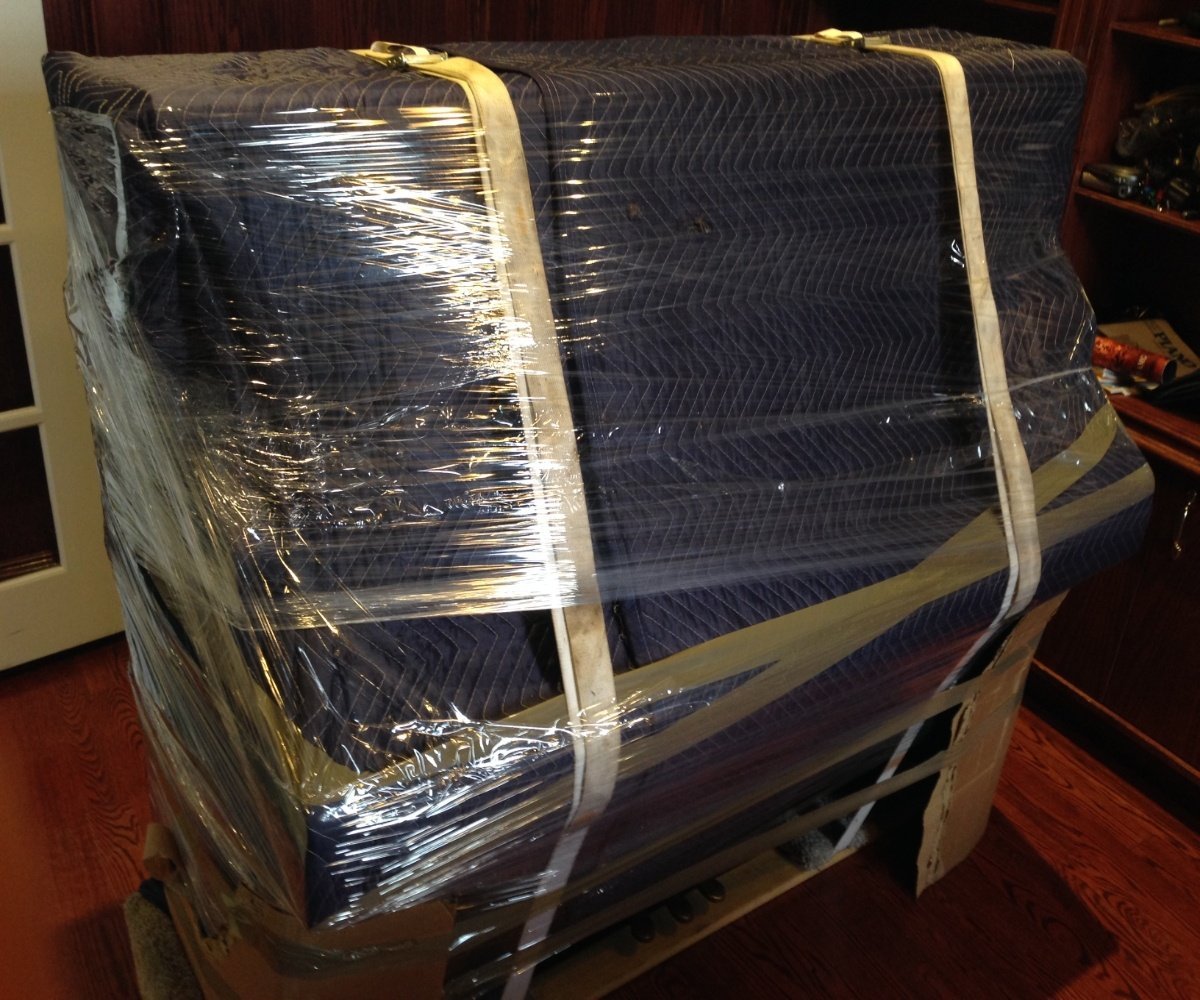
The living room is the domain of large, bulky, and often delicate items. A couch-moving service is a prime example of required skill. A standard sofa requires forklifts to distribute weight and protect the movers’ backs. A large sectional sofa will almost always be broken down into its component pieces—chaise, corner wedge, armless chair—for manageable transport and to fit through doorways. Each piece is wrapped in padded moving blankets and secured with plastic wrap. Recliner handling requires special attention. Power recliners must have their cords secured, and all recliners should be locked in the closed position, often by tying the footrest down with a strap or moving blanket to prevent it from swinging open during transport and causing damage or injury. This meticulous approach is what separates a dedicated service from a general local mover.

Bedroom Furniture Moving Service

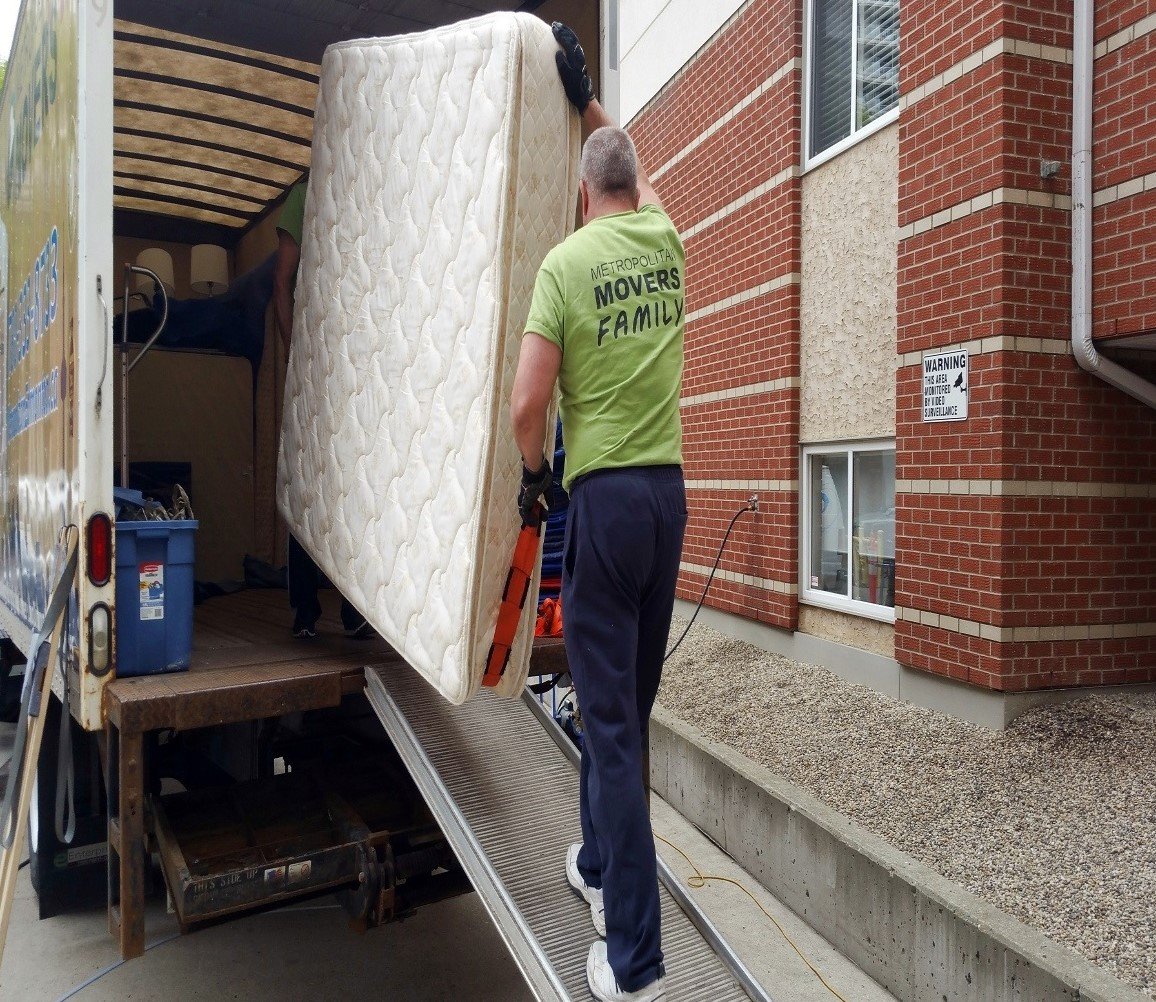
Bedroom furniture is defined by size and, often, particle board construction that is strong under static load but vulnerable to torsion during a move. A mattress moving service is a frequent request. Premium mattresses, especially memory foam or pillow-top models, must never be bent or folded. They are transported flat, often in a dedicated mattress bag to protect against dirt and moisture. Adjustable bed bases are heavy, electrical, and require careful disconnection and wrapping. Bed frames and headboards, particularly large sleigh beds or wrought iron frames, are systematically disassembled. All hardware is placed in a labeled bag and taped to the piece itself. Dressers and armoires are emptied, drawers are removed (to reduce weight and prevent them from sliding out), and the entire unit is wrapped in blankets. Mirrored furniture receives an extra layer of cardboard taped over the glass.

Dining and Office Furniture

These items combine weight, fragility, and complexity. Dining tables often have removable legs. A professional crew will detach the legs, wrap the tabletop in padded blankets and cardboard (especially for glass or polished wood), and pack the legs separately. China cabinets and hutches are two-piece items; the hutch is removed from the base, and both are wrapped independently. Office furniture, such as large L-shaped desks, modular workstations, and filing cabinets, is disassembled into its main panels. This is a common requirement for an office moving service as well. Lateral filing cabinets present a unique challenge due to their weight when full; they are often moved with the drawers in place but locked, or the drawers are removed and moved separately if the cabinet is overloaded. For businesses in Aurora or Newmarket, this expertise is essential.

What Movers Handle During Appliance and Furniture Moves

Lifting, Loading, and Transport with Professional Equipment

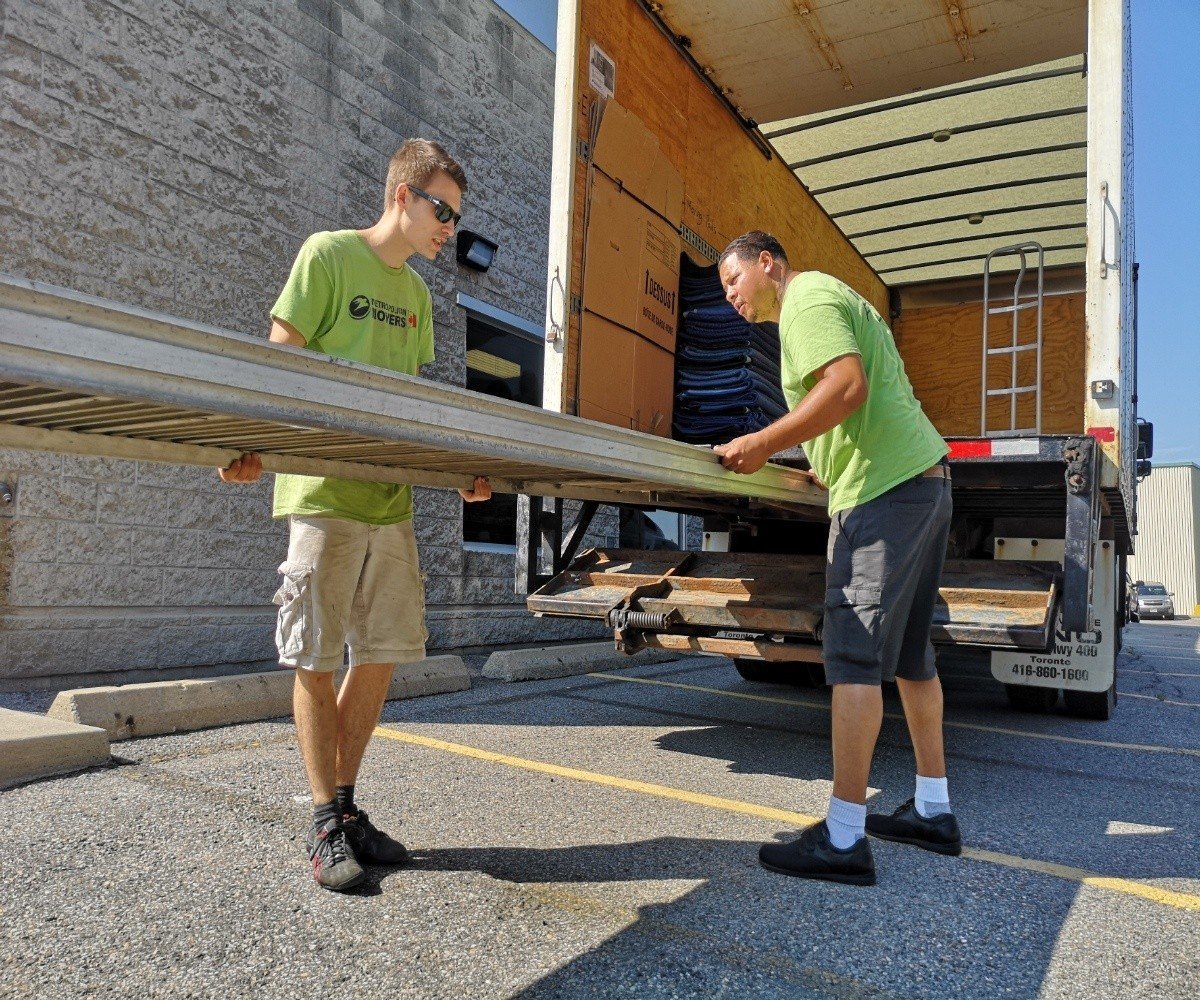
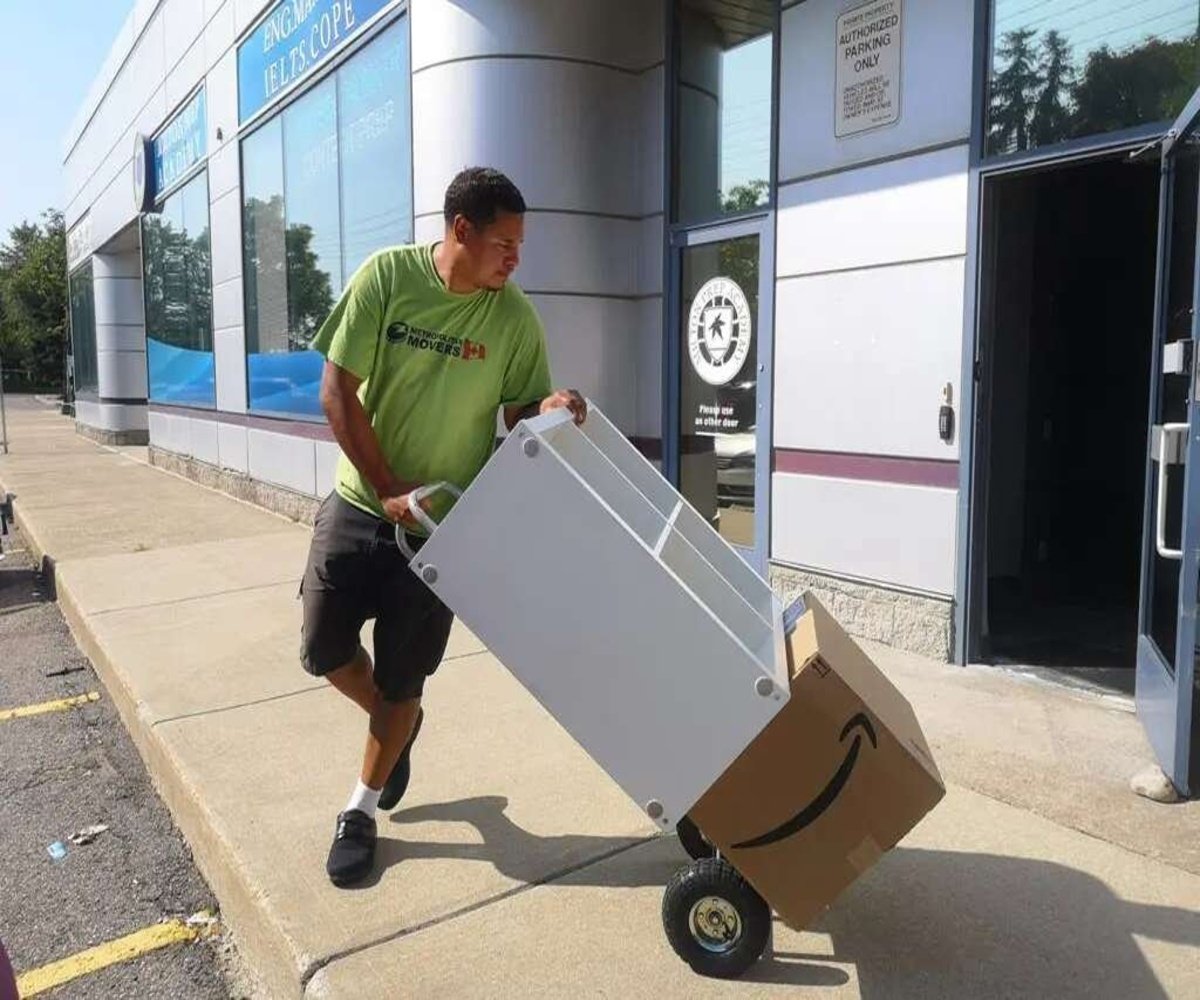
This is the core physical service. Professional movers do not simply “lift and carry.” They employ mechanical advantage. This includes using appliance dollies with stair-climbing tracks for refrigerators and washers, four-wheel dollies for sofas and tables, and forearm forklift straps for evenly distributing the weight of dressers and armoires between two movers. Loading involves strategic placement in the truck to prevent shifting during transit. Heavy appliances are often placed against the truck wall and strapped in. Furniture is loaded to create a solid, interlocked “wall” of items that cannot move, a technique crucial for both long-distance moving in Canada and local hauls. Transport is done in vehicles equipped with air-ride suspension to minimize jarring bumps, and items are always secured with straps or load bars.

Basic Disassembly, Protective Wrapping, and Strategic Placement

Professional service includes the non-permanent disassembly required for safe transit. This means removing bed frames, detaching table legs, taking apart sectional sofas, and removing drawers from dressers. It does not include dismantling built-in cabinetry or performing structural modifications. Every item receives protective wrapping tailored to its material. Finished wood gets padded moving blankets are secured with plastic wrap. Delicate upholstery may get a breathable fabric cover first, then a blanket. Glass tabletops receive cardboard corners and full blanket wraps. At the destination, movers provide room-of-choice delivery. They will not only bring the item into the home but also place it in the specific room you designate, and often will perform basic reassembly—reattaching bed frames, table legs, and sofa sections—so the item is left in a functional state. This full-service approach is also central to our packing and unpacking service.

What Movers Do Not Handle

Appliance Installation, Reconnection, and Structural Work

This is the most critical boundary to understand. Professional appliance movers handle the disconnection and transport, but they are typically not licensed gas fitters, plumbers, or electricians. Therefore, they do not perform appliance installation and reconnection involving gas, electrical, and plumbing hookups. They will deliver and place the appliance, but connecting a gas line to a stove, wiring a dishwasher to a house circuit, or hooking up a refrigerator’s water line is outside their scope and, often, illegal for them to perform without specific trade licenses. They also do not perform structural modifications. This includes door removal (though they may remove a door from its hinges if it’s a simple pin), cutting door frames, or altering cabinetry to make an item fit. Their job is to navigate the existing space, not change it.

Hazardous, Restricted, and Owner-Prepared Items

Movers are governed by strict regulations and insurance policies that prohibit handling certain items. This includes hazardous materials like chemicals, fuels, propane tanks, and paint thinners. They also will not move items that are not properly prepared. For appliances, this means an undrained washing machine or a refrigerator full of food. For furniture, this means a dresser with contents still in the drawers or a desk covered in loose office supplies. Furthermore, they do not move built-in systems that are part of the home’s structure, such as a built-in vacuum system, central air conditioning compressors, or permanently installed lighting fixtures. Understanding these limitations before moving day prevents costly delays and refusals. This is a standard policy across professional services, from piano movers in Aurora to general furniture teams.

Preparing Appliances and Furniture for Moving

Pre-Move Preparation for Appliance Moving Service

Proper preparation is mandatory for a smooth move. For appliances, this begins with cleaning and drying. Refrigerators and freezers must be emptied, defrosted, and wiped dry to prevent mold and water sloshing. Dishwashers and washing machines must be run on a drain cycle to remove residual water. The next step is securing doors and components. Refrigerator and oven doors should be taped shut. All removable shelves, drawers, and racks inside appliances should be taken out, wrapped separately, or securely taped in place. For washing machines, the critical step is reinstalling the transit bolts to lock the drum. This preparation is often a condition of the moving service; if an appliance arrives unprepared, the movers may refuse to load it or charge an additional fee to prepare it on-site. For insights on preparing for larger moves, our blog offers resources like our guide on moving to Newmarket.

Furniture Readiness Checklist and Protection

Furniture must be made ready for the movers’ hands. The first rule is clearing contents and loose items. All dressers, desks, nightstands, and cabinets must be empty. Not only does this make them lighter and safer to move, but it also prevents internal damage from items shifting. The second crucial step is measuring doorways and hallways. You should know the narrowest point on the path out (and in at the new location) and the dimensions of your large furniture. This allows you and the movers to plan for disassembly or specific angles of tilt. For mattresses and upholstered furniture, invest in proper mattress bags and, for sofas and chairs, breathable fabric covers or plastic wrap to protect against dirt, rain during loading, and accidental snags. Proper preparation is as vital for a single furniture move as it is for a full-scale house moving service.

Local Considerations for Appliance and Furniture Moving Services in Vaughan

Vaughan Homes, Condo Rules, and Access Logistics

The local landscape in Vaughan directly dictates the complexity and cost of a move. Moving a grand piano into a modern condo in the Vaughan Metropolitan Centre (VMC) involves a completely different set of protocols than moving a large appliance into a subdivided home in historic Thornhill. Vaughan homes, particularly older ones, may have narrow, winding staircases, small landings, and tight corners that challenge even the most skilled movers. Condo rules and elevator reservations are the most common hurdles. Most condominiums enforce strict move-in/move-out time windows, often requiring bookings 48-72 hours in advance and proof of the mover’s insurance. The elevator must be reserved and padded, and there is often a limited window (e.g., a 4-hour slot) to complete the entire job. Missing this window can result in hefty fines. This is a key consideration for any moving company operating in Vaughan.

Parking, Loading Zones, and Municipal Bylaws

Parking is a frequently underestimated obstacle. In suburban Vaughan neighbourhoods without driveways, or in condo districts, securing legal parking for a large moving truck is non-negotiable. Professional movers will typically arrange for a City of Vaughan parking permit to reserve a section of the street for the moving truck. This process takes time and cannot be done at the last minute. If a legal loading zone is unavailable, the truck may have to park far away, requiring the use of a stair-climbing dolly for extended distances—a factor that increases time and cost. Understanding and planning for these local access issues is a key part of a professional mover’s quote. Similar challenges are faced by the best moving companies in Richmond Hill, emphasizing the need for local expertise.

Costs and Pricing Factors

Appliance and Furniture Moving Service Cost Drivers

Pricing is not arbitrary; it’s calculated based on specific risk and labor factors. For an appliance moving service, the primary cost drivers are weight, size, and accessibility. A standard refrigerator may have a base rate, but a commercial Sub-Zero model weighs twice as much and requires more manpower and equipment. Accessibility is paramount: moving an appliance down a flight of basement stairs with a tight corner will cost significantly more than moving the same appliance from a ground-floor garage to a driveway. For a furniture moving service, pricing is typically based on the number of items and the estimated labor time. A single mattress move is straightforward. A large sectional sofa that requires disassembly, multiple flights of stairs, and a long carry from the truck will be priced higher due to the increased time, manpower, and handling complexity. These principles apply whether you’re using a basic local moving service or a specialized crew.

Couch Moving Service and Mattress Moving Service Pricing Nuances

Even within furniture moves, pricing nuances exist. A couch moving service quote will vary dramatically between a standard apartment-sized loveseat and a large, heavy, premium leather sectional with multiple pieces. The material matters—delicate fabrics or leathers may require more careful wrapping. A mattress moving service price depends on size (king mattresses are awkward and require two movers), type (a traditional innerspring is easier to maneuver than a floppy, heavy memory foam mattress), and access (box springs add another item to move). Professional movers provide accurate quotes by asking for photos, dimensions, and a detailed description of the access situation at both pickup and delivery locations. For a complete picture of moving costs, you can reference broader guides like How Much Does a Moving Service Cost.

Risks and Damage Prevention

Common Risks in Appliance and Furniture Moves

The risks are twofold: damage to your property and damage to your items. Floor, wall, and doorway damage is extremely common in DIY moves. A heavy appliance dolly can gouge hardwood floors. A misjudged corner can put a sofa arm through drywall. Door frames can be scraped or cracked. The other major risk is damage to the item itself. Appliances can suffer internal mechanical damage from improper transport (like an unsecured washing machine drum). Furniture can have legs snapped, veneer chipped, upholstery torn, or glass components shattered. These risks are not merely about carelessness; they are about a lack of the correct equipment and techniques to manage the laws of physics in confined residential spaces. The stress of managing these risks is a key reason many turn to professionals, as explored in our article on how stressful moving is.

How Professional Movers Reduce Risk with Technique and Equipment

Professionals mitigate risk through a combination of techniques, equipment, and processes. The equipment is fundamental: appliance dollies with stair-climbers, furniture dollies, padded moving blankets in various weights, furniture straps, and forearm forklifts. The techniques are learned: the “pivot and tilt” for getting a dresser through a doorway, the “stair-walking” method for guiding a dolly down steps with constant tension, and the strategic use of blankets as sliders on carpet. The process includes pre-move walkthroughs to identify hazards, the use of protective floor runners and corner guards, and constant communication between crew members during complex maneuvers. This systematic approach is what you pay for—it transforms a risky endeavor into a controlled operation. This is the standard for all our services, including long-distance moving services.

Valuation, Liability Limits, and the Claims Process for High-Value Items

Understanding your financial protection is critical. Most moving companies operate under two primary liability options. Released Value Protection is the default, included cost. It provides minimal coverage, typically 60 cents per pound per article. For a 300-pound refrigerator, that’s $180 in coverage, far below its replacement value. Full Value Protection is an additional purchase. Under this, the mover is liable for the repair, replacement, or cash settlement of the item at its current market value if lost or damaged. Before moving, you must declare any high-value items. The mover will note the condition on an inventory sheet—your signature on this sheet is crucial. In the event of damage, you must note it on the sheet before the movers leave and file a written claim within the company’s deadline (often 9-30 days). Supporting evidence like pre-move photos and receipts is vital. This process underscores the importance of hiring a reputable, insured company for valuable appliances and furniture, a principle that applies equally to storage moving services.

Choosing the Right Appliance and Furniture Moving Company

What to Look for in an Appliance Moving Service Provider

Selecting a specialist requires vetting specific credentials. First, look for proven experience with heavy items. Ask how many refrigerator or washing machine moves they perform monthly. Do they have photos or case studies? Second, verify their insurance and liability coverage in detail. Ask for their Certificate of Insurance and confirm it includes adequate cargo coverage. Ask specifically if their crews are trained and authorized to disconnect standard gas and water connections, or if they subcontract that to licensed tradespeople. A professional company will have clear answers and protocols. They should also provide a clear, written quote that details all potential charges, including stairs, long carries, and any fees for unprepared appliances. Researching the best moving companies in neighboring regions can also provide benchmarks for service quality.

Questions to Ask Before Booking a Furniture Moving Service

Your due diligence should be item-specific. Beyond general questions, ask: “What is your specific process for moving a [describe your item, e.g., ‘king-sized memory foam mattress’ or ‘antique wooden dresser with a marble top’]?” Ask about their item-specific handling policies: “Do you provide mattress bags? What type of wrapping do you use for polished wood?” Inquire about their crew size for your job—a large sectional may require three movers, not two. Finally, confirm their service guarantee: “What happens if your crew cannot get an item into the home due to an unforeseen access issue? What are the charges?” Transparent answers to these questions separate true specialists from general labour providers. For more insights, our comprehensive moving blog offers a wealth of information.

Common Mistakes to Avoid

  • Attempting DIY Appliance Moves: Underestimating the weight and complexity of disconnecting appliances leads to property damage, injury, and broken appliances. The cost of repair far exceeds the cost of professional service.
  • Not Measuring Access Points: Assuming an item will fit through a door or staircase is a recipe for a costly, frustrating blockage on moving day. Always measure the item and the smallest doorway/stair width on the path.
  • Assuming Movers Handle Installations: The most common point of confusion. Clarify in writing that delivery and placement do not include gas, water, or electrical reconnection unless explicitly stated in a separate, specialized service agreement.
  • Booking Furniture Moving Service Without Item Details: Sending a vague request like “I have a couch to move” results in inaccurate quotes. Provide photos, dimensions, brand/model if possible, and details about stairs and parking.

Short-Notice and Single-Item Moves

Logistics and Limitations of Urgent and Focused Moves

The mechanics of moving change under time or scope constraints. For a same-day appliance moving service, the primary limitation is crew and truck availability. A company may be able to accommodate it, but premium rates apply, and the service may be limited to the basic extraction and delivery without extensive preparation. For single-item moves, like a specific couch moving service or a one-off mattress moving service, the pricing is efficient but requires precise scheduling. The mover is dedicating a crew and truck to a single task, so accurate timing is crucial. These services are perfect for urgent relocations where you need one critical item moved immediately, or for integrating new purchases into your home. The key is providing all details upfront to ensure the right resources are dispatched. This agility is also important for certain office moving service requests.

When to Hire a Professional Appliance Moving Service

Signs Professional Help Is Absolutely Required

You should hire professionals when any of these factors are present: excessive weight (any item you cannot safely lift with a partner), fragility (items with glass, marble, delicate veneers, or antique construction), and access complexity (involving stairs, narrow turns, elevators, or long carries). If the item requires disconnection from home utilities, that is a non-negotiable sign. If you lack the proper moving equipment—dollies, straps, moving blankets—a DIY attempt will almost certainly result in damage to the item, your property, or yourself.

DIY vs Professional Appliance and Furniture Moving Services: A Realistic Comparison

The DIY approach appears to save money but introduces high variable costs and risks. The professional cost is a fixed, known investment that purchases risk transfer, time savings, and guaranteed expertise. Consider the true DIY cost: truck rental, equipment rental, fuel, your time, helper food/drinks, and the high probability of minor property damage (scuffed floors, nicked walls) that you’ll pay to repair. Now weigh that against the professional fee, which includes all equipment, insured labour, and accountability for damage. For any item of substantial value or complexity, the professional service is the rational, cost-effective choice when the total cost of ownership is considered. It is an investment in the safety of your property and your own physical well-being. This calculated approach is what defines a professional moving and storage company committed to client care.

***

Moving heavy appliances and furniture is a task that demands respect for the objects, the spaces they move through, and the people doing the moving. Professional services exist not as a luxury, but as the necessary application of specialized skill to a common problem.

Stop risking damage to your home and your valuable items. Get a guaranteed, upfront quote for your specific appliance or furniture move. Whether it’s a single refrigerator, a grand piano, or an entire living room set, our specialized crews have the equipment, training, and insurance to handle it safely and efficiently.

**Click to get your fast, free quote today.** Visit our dedicated furniture removal service page to start, or contact us directly with photos and measurements via our contact page for a detailed assessment. To see how we handle other complex moves, learn about our piano moving service. For all your moving needs in the GTA North, trust your local experts. Let the experts handle the heavy lifting.

Leave a Reply

Your email address will not be published. Required fields are marked *